
Dementia-Inclusive Design
Environments should enable life—not simply contain it
The design of a care environment is never neutral. It can support independence, confidence and meaningful everyday living—or unintentionally create confusion, distress, restriction and dependence.
At Innovare Dementia Consultancy, we work with care providers, architects and design teams to create evidence-informed environments shaped around the people who will live within them.
Our approach brings together dementia design research, person-led practice and real-world care experience. From reviewing an existing care home to advising on a new development, we help ensure that every design decision contributes to a better quality of life.
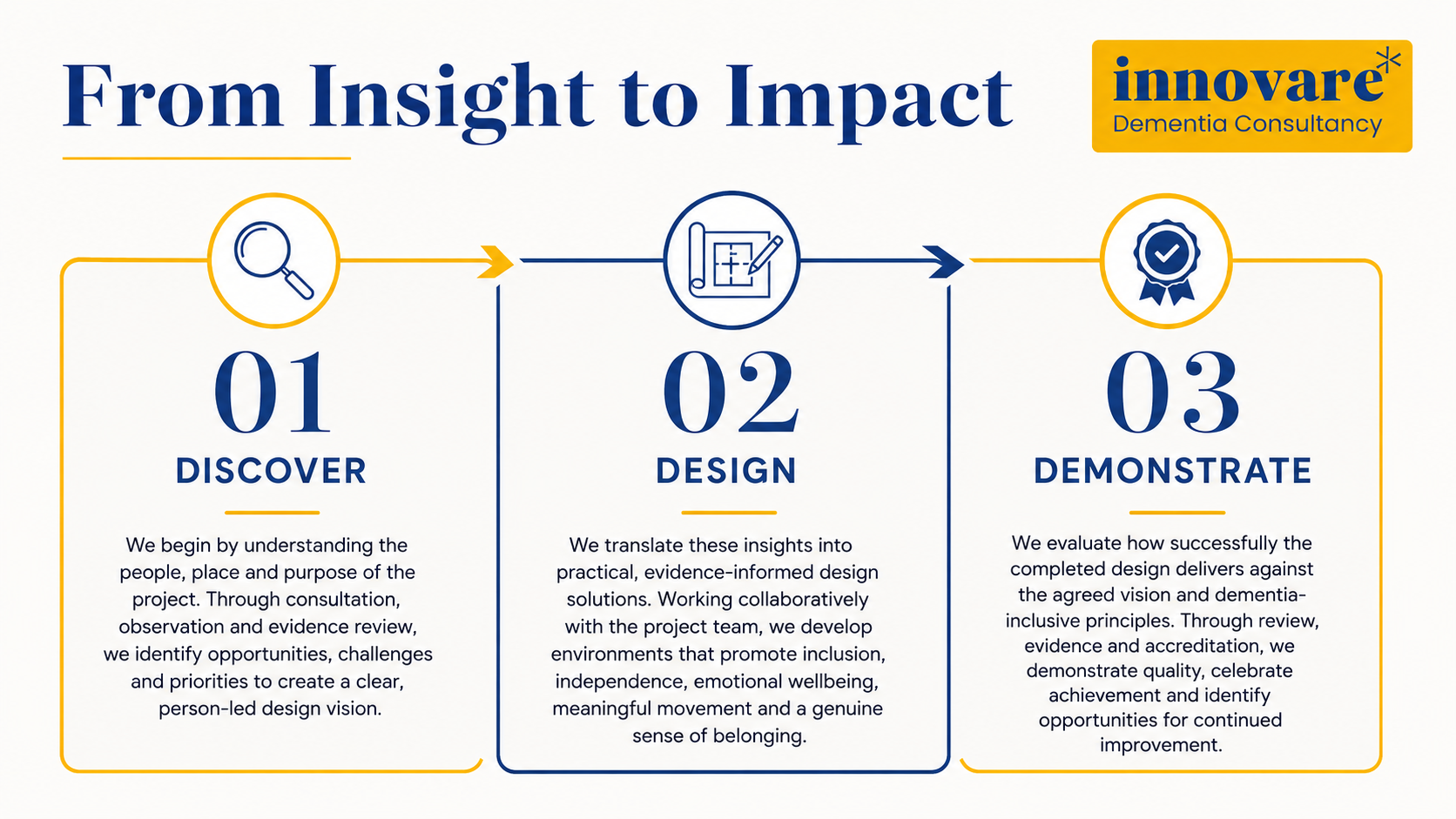
Discover → Design → Demonstrate
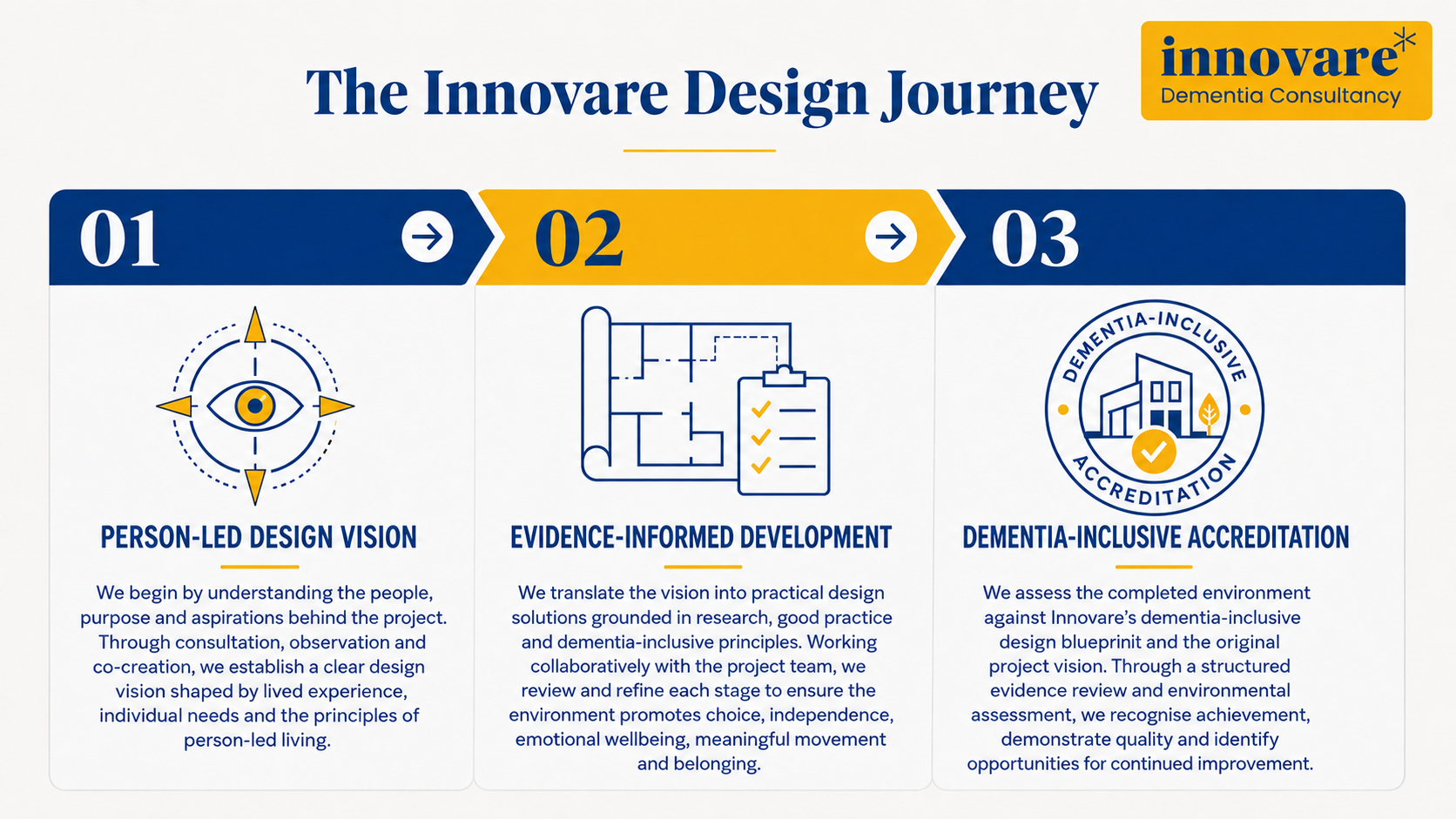
Person-Led Design Vision → Evidence-Informed Development → Dementia-Inclusive Accreditation
Dementia-inclusive design is about far more than signage, colour contrast or traditional ideas of safety.
It is about understanding how the whole environment influences:
Independence and autonomy
Emotional regulation
Orientation and confidence
Meaningful movement
Identity and belonging
Social connection
Sleep and circadian rhythms
Staff practice and support
Everyday choice and control
We help organisations create environments that are understandable, predictable and comfortable—without becoming clinical, restrictive or institutional.
The Innovare Dementia-Inclusive Design Blueprint
Our design work is structured around five interconnected pillars:
1. Person-Led Living
The environment makes ordinary choices visible, understandable and independently accessible
2. Emotional Regulation
Sensory load is reduced through predictable space, controlled light and genuine opportunities to retreat.
3. Meaningful Movement
Movement is enabled through continuers routes, meaningful destination, rest and direct contact with nature.
4. Identity and Belonging
Personal history, recognisable thresholds and distinct destinations make identity visible in the architecture.
5. Care Enabled by Design
The layout reduces compensatory task-work and supports visible, relational and dignified practice.
Why invest in dementia-inclusive design?
Good design is not an optional finishing touch. It is part of how support is delivered.
A well-designed environment can:
Promote independence and confidence
Reduce avoidable confusion and distress
Support movement, mobility and engagement
Improve social connection and everyday participation
Reduce reliance on restrictive responses
Help staff provide more relational and person-led support
Create a more welcoming experience for families and visitors
Reduce the need for expensive changes after completion
Getting the design right at the beginning is better for people, better for practice and better for long-term organisational sustainability.
Who we work with
Our design consultancy is available to:
Care home providers
Supported living organisations
Health and social care services
Architects and interior designers
Property developers
Housing providers
Commissioners and investors
Organisations planning refurbishment or service transformation
Support can be commissioned for an individual space, an existing building, a refurbishment programme or a complete new development.
Create environments that make better lives possible
Whether you are reviewing an existing care environment or beginning with a blank page, Innovare can help you translate evidence and person-led principles into practical design decisions.
Together, we can create environments where people living with a dementia feel confident, connected, recognised and able to continue living with purpose.
Speak to Innovare about your project
Contact us to arrange an initial consultation and explore how our dementia-inclusive design expertise could support your development.